Release time:Oct 27, 2026
Mabwell (688062.SH, 02493.HK), an innovation-driven biopharmaceutical company with a fully integrated industry chain, presented Phase 2 clinical results for its Nectin-4–targeting ADC 9MW2821 (Bulumtatug Fuvedotin, "BFv") in locally advanced or metastatic triple-negative breast cancer (TNBC) in an oral presentation at the 2026 European Society for Medical Oncology (ESMO) Congress. The report showed that 9MW2821 achieved encouraging antitumor activity and a manageable safety profile in patients previously treated with an ADC carrying a topoisomerase I inhibitor payload (hereinafter "Top1i ADC-pretreated"), and is expected to offer more treatment options for ADC-pretreated patients.
This study was led by Professor ZHANG Jian of Fudan University Shanghai Cancer Center, and Prof. MENG Yanchun of Fudan University Shanghai Cancer Center presented the detailed results on behalf of the study team:
Background:
BFv is an ADC that delivers monomethyl auristatin E (MMAE) to Nectin-4–expressing cells. Nectin-4 is highly expressed in patients with triple-negative breast cancer (TNBC). For patients with prior exposure to Top1i-based ADCs, switching to a Nectin-4–targeting ADC with a distinct payload (MMAE) represents a rational therapeutic strategy. This report presents efficacy and safety data from the cohort of la/mTNBC patients previously treated with Top1i-based ADCs in the phase 2 study of BFv (NCT06492005).
Method:
This open-label, single-arm, multicenter Phase 2 study enrolled patients with la/mTNBC previously treated with taxane- or anthracycline-based chemotherapy and Top1i-based ADC therapy. BFv was given intravenously at 1.25 mg/kg on days 1 and 8 every 21 days.
Results:
A total of 62 patients were enrolled, of whom 60 were evaluable for efficacy. The median age was 50.5 years, 82% of patients had an ECOG performance status of 1, 33% had liver metastases at baseline, and 83% had received ≥2 prior lines of therapy. All patients had received prior taxane-based chemotherapy, and 35% had received immune checkpoint inhibitors. Nectin-4 expression was positive in 75% of the 52 patients with available Nectin-4 test results.
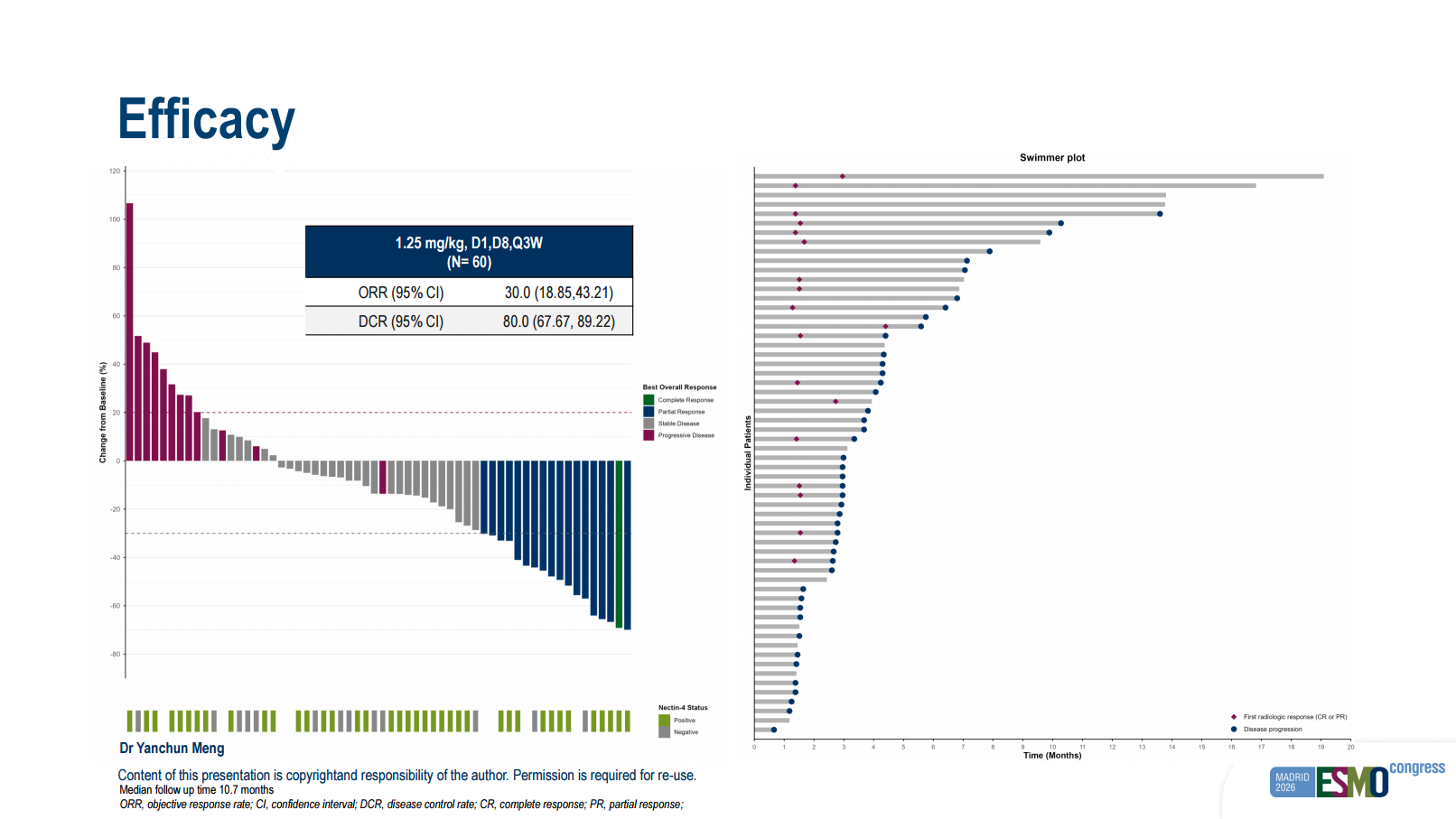
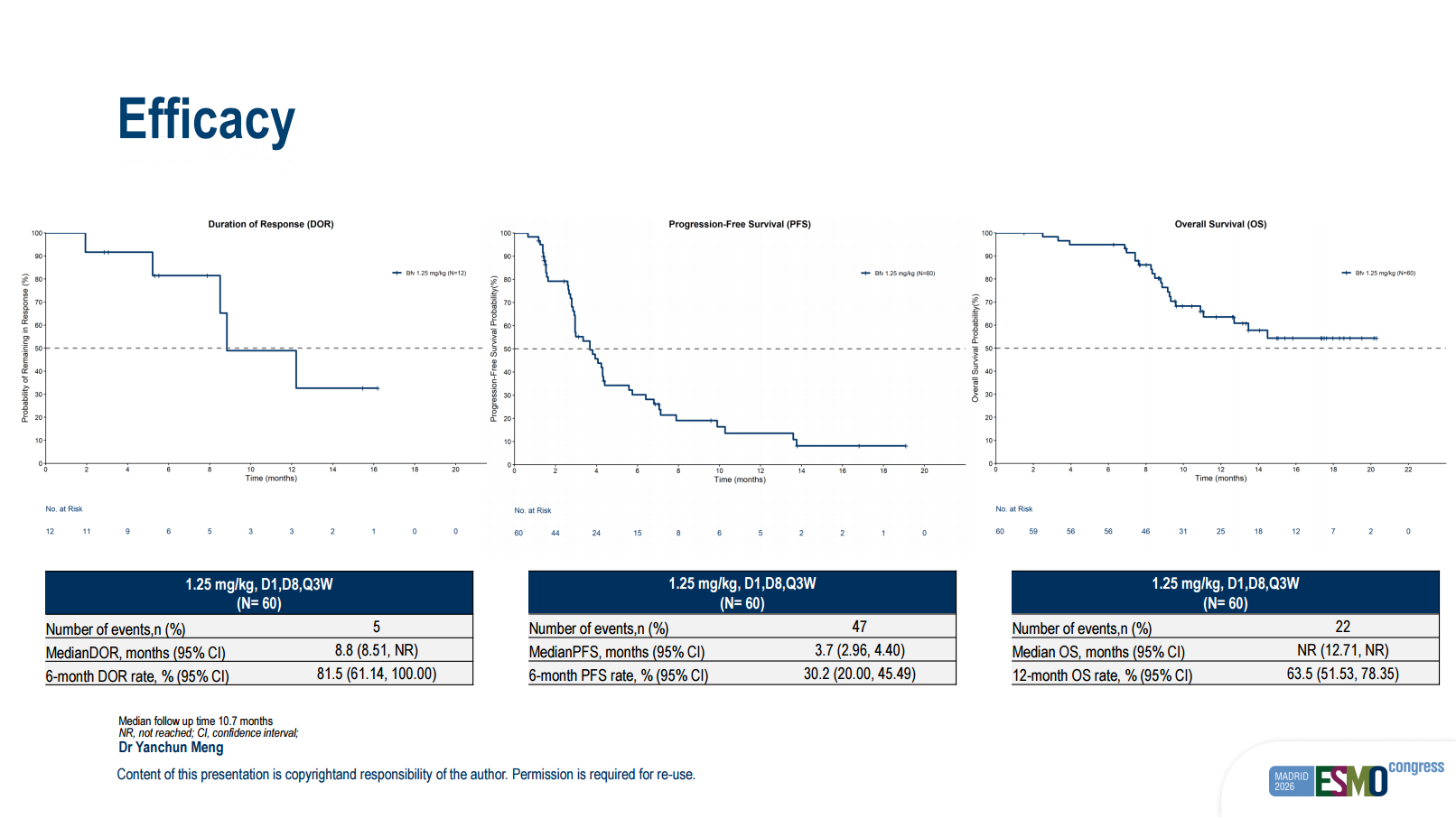
Efficacy results showed that, as of July 19, 2026, among the 60 evaluable Top1i ADC-pretreated patients, the objective response rate (ORR) was 30.0%, the disease control rate (DCR) was 80.0%, median progression-free survival (mPFS) was 3.7 months, median duration of response (mDOR) was 8.8 months, and median overall survival (mOS) had not been reached, with a 12-month OS rate of 63.5%.
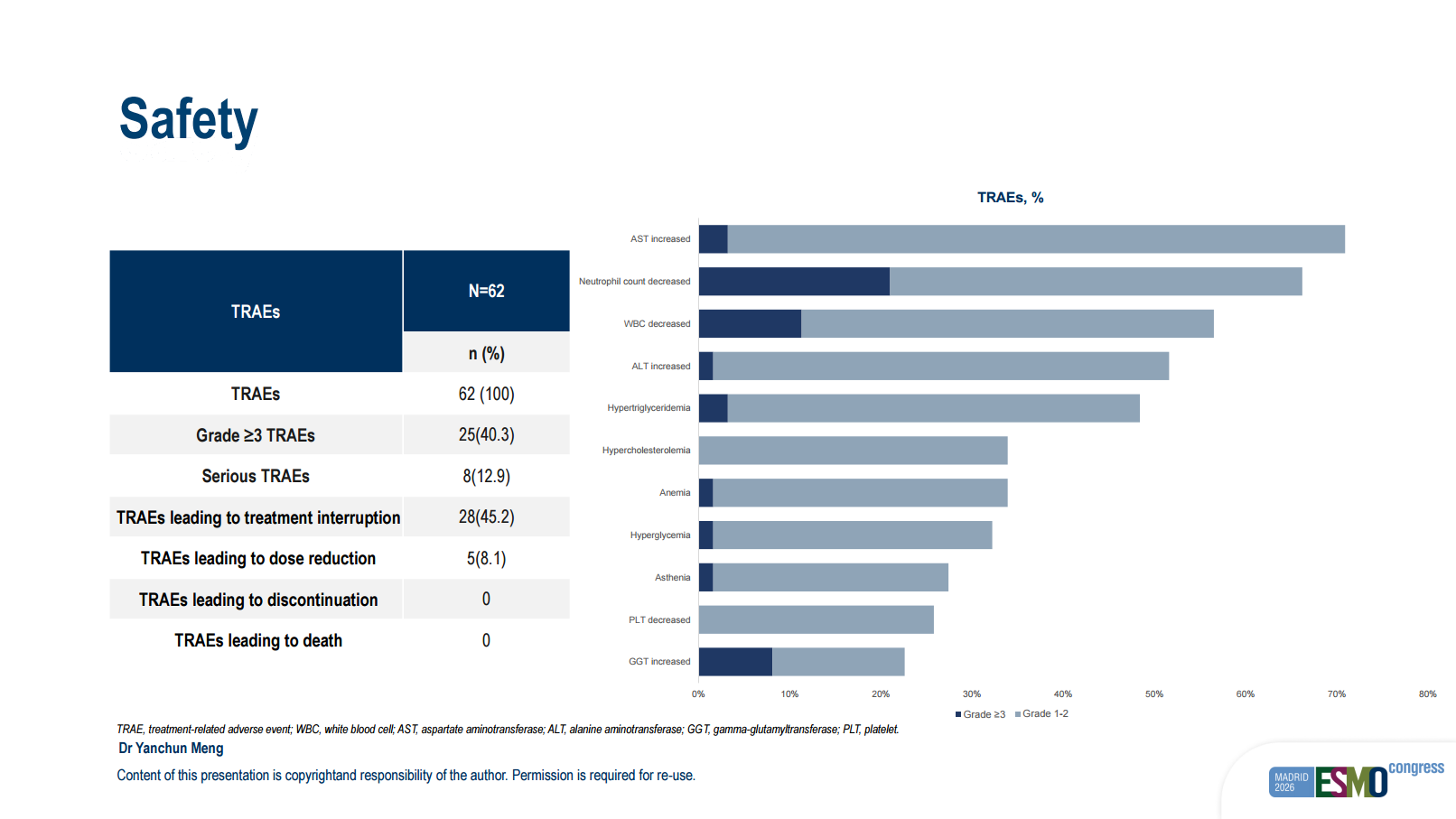
Safety results showed that, among the 62 enrolled patients, treatment-related adverse events (TRAEs) occurred in 100% of patients, Grade ≥3 TRAEs in 40.3%, serious TRAEs in 12.9%, TRAEs leading to treatment interruption in 45.2%, and TRAEs leading to dose reduction in 8.1%. No TRAEs led to discontinuation, and no TRAEs led to death.
Conclusion:
BFv demonstrated promising antitumor activity with a manageable safety profile in patients with la/mTNBC previously treated with Top1i ADCs. The first pivotal trial for this indication worldwide is underway (NCT07556848, CTR20261518).
Currently, all ADCs approved for TNBC use a topoisomerase I inhibitor payload. After progression on these agents, chemotherapy remains the mainstay of care and new treatment options are urgently needed. 9MW2821 is the first to enter Phase 3 development for the Top1i ADC-pretreated TNBC globally and its Phase 1b study is underway in the United States. it is expected to provide a novel treatment option for patients with TNBC in the future.