Release time:Jun 02, 2026
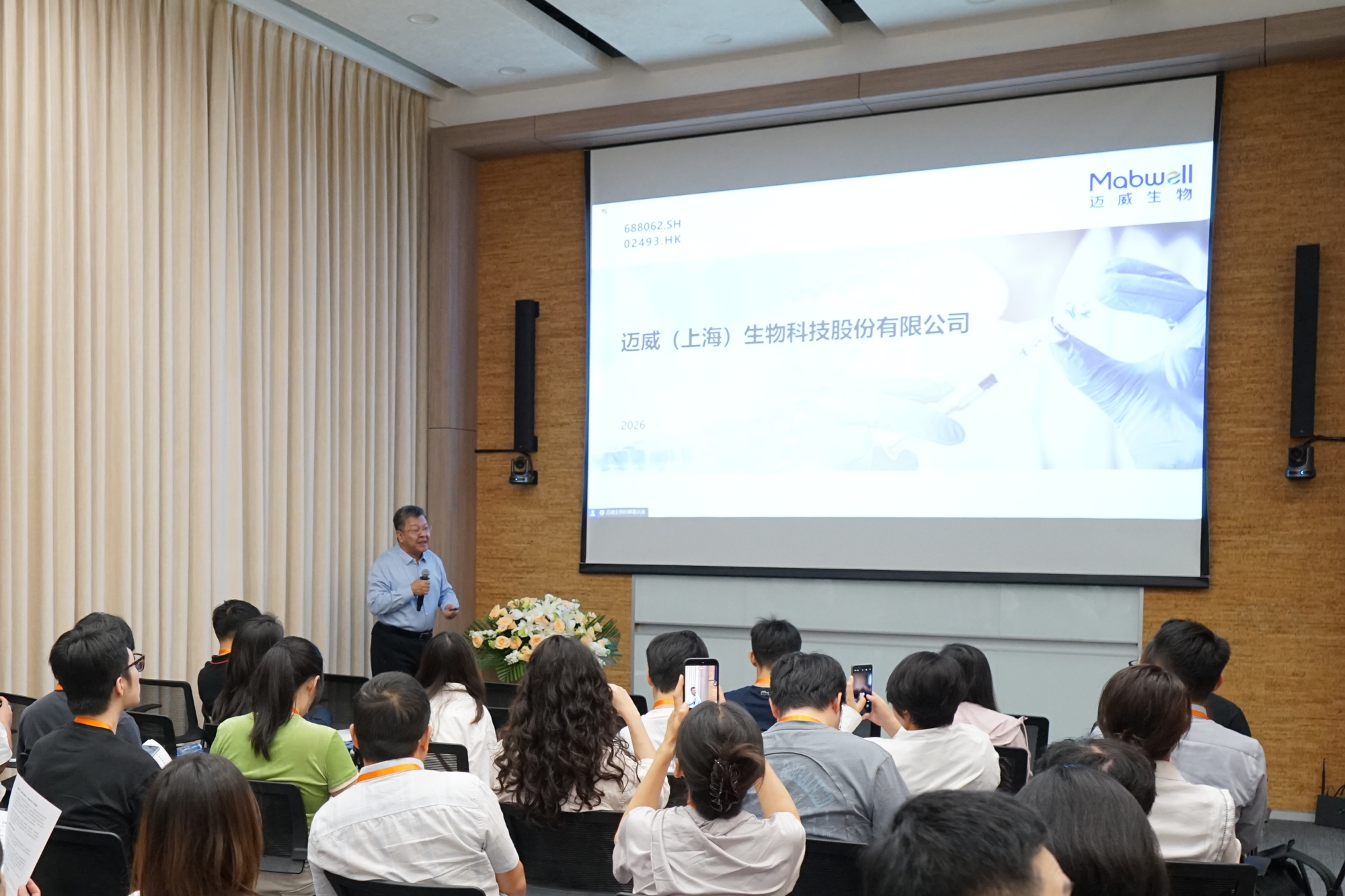
The "Press Conference on Early Diagnosis and Clinical Translation of Parkinson’s Disease & Clinical Trial Initiation Meeting of SST001, the First α-syn PET Tracer Entering Registered Clinical Study in China" was successfully held at Huashan Hospital Affiliated to Fudan University on June 2, 2026. The event was co-hosted by Huashan Hospital Affiliated to Fudan University, the Interdisciplinary Research Center on Biology and Chemistry (IRCBC) of the Chinese Academy of Sciences, and Shanghai Jiao Tong University, and organized by SynuSight Biotech, a portfolio company of Mabwell. The conference brought together leading experts and scholars from industry, academia, research, and clinical medicine to engage in in-depth discussions on the translation of early diagnostic approaches for Parkinson’s disease.
The conference focused on the clinical needs for early diagnosis and precise subtyping of neurodegenerative diseases such as Parkinson’s disease (PD) and multiple system atrophy (MSA). It highlighted recent advances in the clinical translation of α-syn PET molecular imaging and the latest research on the TPPP/p25‑Seed Amplification Assay (TPPP/p25‑SAA) for accurate MSA diagnosis. In addition, the official launch of the Phase I clinical study of SST001 injection was announced.
Distinguished speakers at the conference included: Mao Ying, President of Huashan Hospital Affiliated to Fudan University; Yuan Junying, Director of IRCBC, Chinese Academy of Sciences; Ding Kuiling, President of Shanghai Jiao Tong University; Lu Bai, President of Shanghai Academy of Natural Sciences; Shen Hong, Senior Vice President and Head of China Innovation Center of Roche; and Liu Datao, Chairman and CEO of Mabwell. Also attending were Professor Guan Yihui, Professor Wang Jian, Professor Zhang Jing, and Professor Zuo Chuantao from Huashan Hospital; Professor Liu Cong from IRCBC; Professor Yu Chunjing from Affiliated Hospital of Jiangnan University; Professor Li Dan from Shanghai Jiao Tong University; and Fan Mengqi, CEO of SynuSight Biotech.
Focusing on Unmet Clinical Needs: A Novel Path for In Vivo Visualization of α-syn
Both PD and MSA are prototypical α‑synucleinopathies, sharing the pathological hallmark of misfolded α‑synuclein (α‑syn) aggregates. For a long time, however, there has been a lack of tools to directly visualize α‑syn pathology in the living human brain. To address this need, a joint task force comprising IRCBC (CAS), Shanghai Jiao Tong University, Huashan Hospital, and SynuSight Biotech has leveraged synergies in basic research, clinical resources, and industrial translation. The team has advanced an integrated “basic research – clinical demand – translational validation” collaboration model, accelerating the path from original discovery to clinical application. The collaborative effort has resulted in SST001, the first wholly China‑developed α‑syn PET tracer to enter registered clinical studies. SST001 is labeled with the radionuclide [¹⁸F] and specifically targets pathological α‑syn protein. When used with PET/CT, it aids in the diagnosis and differential diagnosis of α‑synucleinopathies, including PD and MSA.
At the conference, Professor Liu Cong (IRCBC, CAS) and Professor Wang Jian (Huashan Hospital) presented the early preclinical and Investigator-Initiated Trial (IIT) study results for SST001. The data show that SST001 exhibits favorable blood–brain barrier permeability and brain imaging pharmacokinetics, enabling effective brain uptake. Low non‑specific retention and rapid brain clearance enhance pathological signal contrast. In human PET studies, SST001 produced clear, stable, and interpretable α‑syn‑related imaging signals in pathology‑relevant brain regions of patients with PD and MSA, with spatial distribution patterns consistent with disease pathology. These findings provide a strong foundation for subsequent registered clinical development.
The Phase I clinical study of SST001 will systematically evaluate its safety, tolerability, biodistribution, dosimetry, and pharmacokinetics in healthy volunteers and patients with MSA and PD. It will also preliminarily explore PET imaging characteristics in different α‑synucleinopathy populations, supporting future registration studies, standardization of imaging procedures, and establishment of image interpretation criteria.
TPPP/p25‑SAA : A New Approach for Accurate MSA Diagnosis
The conference also presented recent progress from the joint task force in precise MSA diagnosis. Recently, the team of Professor Li Dan (Shanghai Jiao Tong University), Professor Liu Cong (IRCBC, CAS), and Professor Wang Jian (Huashan Hospital) published a landmark study in Cell, reporting a novel MSA‑specific cerebrospinal fluid (CSF) assay. Professor Li Dan presented the findings on behalf of the collaborative team.
TPPP/p25 is a microtubule‑associated protein. The team discovered that during MSA pathogenesis, TPPP/p25 can form disease‑specific pathological amyloid seeds that are detectable in the cerebrospinal fluid (CSF) of patients. Based on this finding, the team optimized a seed amplification assay (TPPP/p25‑SAA) using a miniCORE substrate, enabling the detection of trace amounts of TPPP/p25 seeds in CSF. The assay shows high specificity for MSA‑associated pathological signals and can differentiate MSA from PD, dementia with Lewy bodies (DLB), and healthy controls. This offers a novel technical approach for early recognition and molecular subtyping of MSA.
It was announced that, leveraging SynuSight Biotech’s expertise in diagnostic product development, clinical research, and translational execution, the TPPP/p25‑SAA technology will be advanced from research discovery toward clinical validation, accelerating its development as a fluid‑based test for MSA.
The successful press conference and clinical trial initiation meeting mark the formal start of the Phase I clinical study of SST001 injection and represent a significant step forward for SynuSight Biotech in α‑syn PET molecular imaging and precision diagnosis of neurodegenerative diseases. Moving forward, SynuSight Biotech will continue to be driven by clinical needs, capitalizing on synergies in basic research, clinical resources, and industrial translation to enable earlier and more accurate diagnostic subtyping of PD, MSA, and related disorders.
About SST001
SST001 is a selective, high-affinity PET tracer developed by SynuSight Biotech image pathogenic α-synuclein in Parkinson’s disease and related α-synucleinopathies. SST001 has demonstrated efficient blood-brain barrier penetration, a clear and stable imaging window with rapid washout, low off-target binding, and favorable safety in both preclinical studies and investigator-initiated trials at Huashan Hospital. In patients with PD and MSA, SST001 has consistently produced high-contrast signals in pathology-relevant brain regions and shown robust disease-differentiation performance. Earlier in 2025, SST001 received a $3.84 million research grant from the Michael J. Fox Foundation for Parkinson’s Research (MJFF)—the world’s largest nonprofit philanthropy of PD research—to support its U.S. clinical registration and development, underscoring the strong scientific rationale and clinical potential of this novel α-synuclein PET tracer. This funding award highlights the confidence of leading international research institutions in SST001 as a next-generation imaging biomarker.